Russian cargo ship burns in the Baltic as Finland, Estonia and Russia fight the same fire
Struck by drones, abandoned by its crew and drifting across a maritime border, the Sparta II became an unlikely scene of cooperation: in the Gulf of Finland, extinguishing the blaze mattered more than the war that started it.
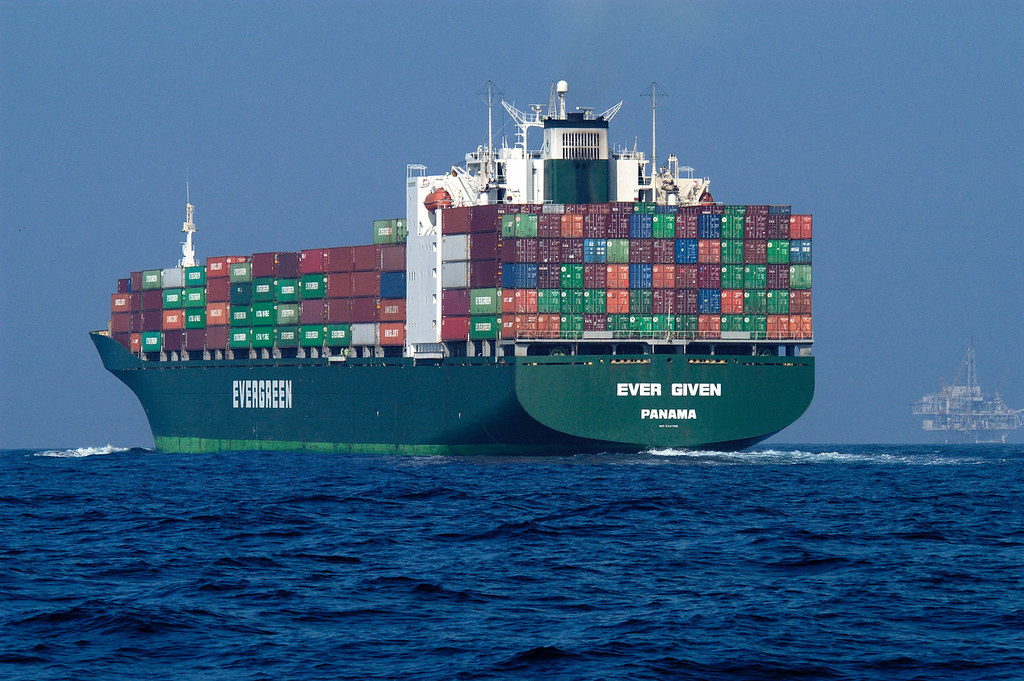
HELSINKI — A Russian cargo ship hit by drones in the Baltic Sea burned for a second day on Sunday as Finnish, Estonian and Russian vessels worked side by side to extinguish the fire in the Gulf of Finland — a rare tableau of practical cooperation in a sea that has become one of the most tense maritime frontiers in Europe.
The 121-metre Sparta II, owned by the Russian logistics company Oboronlogistika and subject to United States sanctions, had left St Petersburg on Friday bound for the Russian exclave of Kaliningrad. On Saturday it was struck by drones in international waters west of Russia's Gogland island. Finland's Defence Forces said Ukraine was likely behind the attack — which, if confirmed, would mark a striking extension of Kyiv's long-range drone campaign into the Baltic.
All 16 crew members were evacuated to a nearby Russian vessel, with one person slightly injured. The unmanned ship then drifted into Finnish waters and anchored off the port city of Loviisa, smoke rising from its holds as the fire smouldered on.
Seven vessels, one fire
By Sunday, seven vessels were engaged in the firefighting operation — two Russian, two Estonian and the remainder Finnish — according to the Finnish Border Guard. Visible flames had been extinguished by Sunday, but the work was far from over: crews continued cooling the ship's containers to keep the fire from reigniting.
"Smoke is still coming from the vessel and heat is building up in the cargo hold," said Jukka-Pekka Lumilahti, the Border Guard's sea safety expert. "The ship itself is stable, but the situation may change rapidly." Officials warned that the accumulation of firefighting water inside the hull could itself threaten the vessel's stability — a classic dilemma of shipboard fires, where the cure can sink the patient.
An unknown cargo
What the Sparta II is carrying remains unconfirmed — and that uncertainty hangs over the whole episode. Ilja Iljin, commander of the Finnish Border Guard's Gulf of Finland Coast Guard District, said there was no confirmed information about the cargo, but that the possibility of military materiel on board could not be ruled out. The ship's owner specialises in military logistics, and the vessel's route — linking mainland Russia to the heavily militarised Kaliningrad exclave — has made ships like it objects of intense Western scrutiny throughout the war.
Finland imposed temporary restrictions on aviation and maritime traffic in the eastern Gulf of Finland as the operation continued. The ship carries a few dozen tonnes of oil, officials said; no oil had been reported in the sea, but environmental protection was a stated priority of the response — one of the practical reasons three countries' vessels ended up fighting the same fire regardless of its cause.
A route through narrow waters
The Sparta II's voyage was routine in everything but outcome. Ships travelling between St Petersburg and Kaliningrad must thread the Gulf of Finland, the narrow arm of the Baltic bounded by Finland to the north and Estonia to the south, passing close to both countries' coasts. Since Finland joined NATO in 2023, that geography has acquired a new charge: the gulf is now effectively an alliance sea lane that Russian shipping must still use, watched from both shores. A stricken Russian vessel drifting across the maritime border into Finnish waters was, in that context, an incident loaded with potential for misunderstanding — which makes the speed and matter-of-factness of the joint response all the more notable.
Maritime law and custom cut through the politics. A burning ship is a hazard to navigation and a pollution threat to a shallow, enclosed and ecologically fragile sea, whoever owns it and whatever it carries. The Gulf of Finland's coasts are lined with ports, summer cottages and protected archipelagos; a few dozen tonnes of oil in the water, or a sunken hull leaking in a shipping lane, would be a Finnish and Estonian problem as much as a Russian one. Officials on all sides appear to have reasoned accordingly.
A sea on edge
The incident lands in waters already thick with suspicion. Since 2022 the Baltic has seen damaged undersea cables and pipelines, shadow-fleet tankers, GPS interference and repeated airspace violations. Estonia's navy commander, Ivo Vark, warned that further attacks could not be ruled out and that all parties in the region should be prepared for them.
For now, the immediate story is simpler: a burning, crewless, sanctioned Russian ship at anchor off a Finnish port, and a multinational effort to make sure it neither sinks nor poisons the sea around it. Whatever struck the Sparta II, putting out its fire turned out to be a job no flag in the Gulf of Finland was willing to leave undone.