South Sudan's universities brace for record intake as 40,000 candidates eye places
More than 40,000 school-leavers are projected to qualify for university admission next year, the caretaker minister of general education has said — a surge that is piling pressure on South Sudan's small university system to find seats, lecturers and lecture halls.
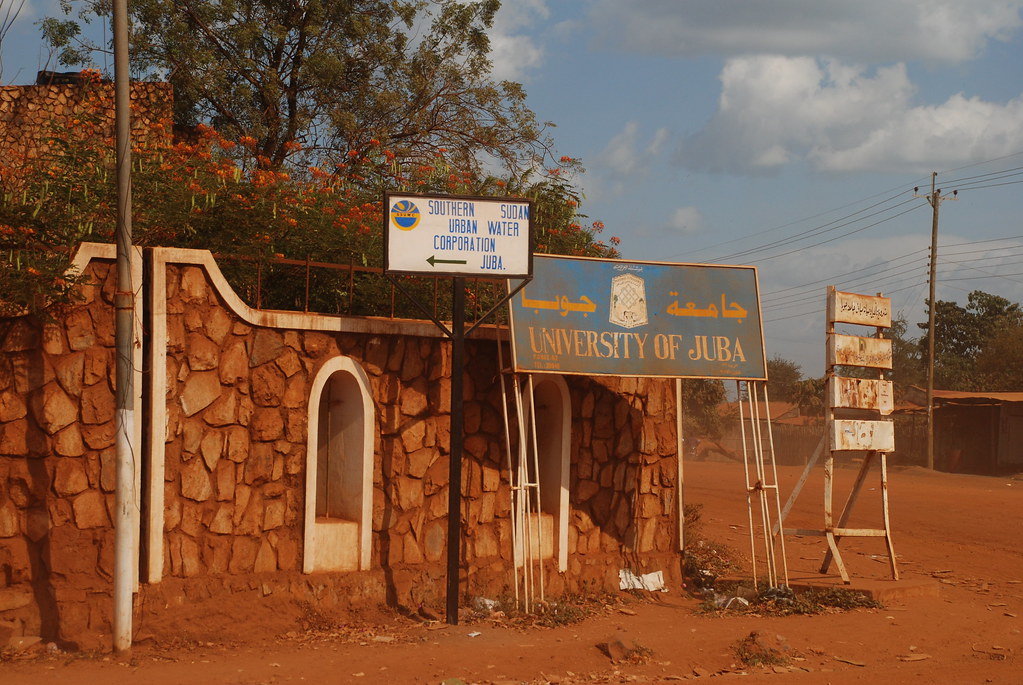
JUBA — South Sudan's universities are facing growing pressure to admit far more students next year, with more than 40,000 candidates projected to qualify for admission, the Caretaker Minister of General Education and Instruction, Dr Kuyok Abol Kuyok, has said.
The minister's warning, reported by Eye Radio, was delivered as the University of Juba — the country's oldest and largest institution — held its 28th convocation ceremony in the capital, graduating more than 6,000 students from 23 schools. The juxtaposition captured the challenge in a single weekend: even as the system celebrates its largest-ever output of graduates, a far larger wave of new students is gathering at its gates.
A number the system has never had to absorb
South Sudan has five public universities — in Juba, Wau, Rumbek, Bentiu and Malakal — alongside a growing number of private institutions. Between them they have historically admitted only a fraction of the school-leavers who qualify each year, leaving tens of thousands of young people in limbo: waiting a year or more for a place, seeking scholarships abroad, or abandoning higher education altogether.
A qualifying class of more than 40,000 would dwarf anything the admissions system has handled before. University administrators have long complained of overcrowded lecture theatres, shortages of academic staff and laboratories, and libraries and student hostels that were never built for the numbers now seeking entry. The minister's remarks amount to an official acknowledgement that those pressures are about to intensify sharply.
The projection is, on one level, a success story. It reflects years of expanding enrolment in primary and secondary schools, including in communities where formal education was disrupted by decades of war. Every additional candidate who completes secondary school represents a family and a community that kept a child in class — often at considerable sacrifice — through conflict, displacement and economic hardship.
Praise, and hard questions
The announcement drew a mixture of celebration and scepticism from the public. Many South Sudanese welcomed the figures as evidence of a young nation hungry for learning, and praised the minister for raising the issue at a graduation ceremony — a moment when the value of education is most visible. Others asked blunt questions about readiness: how institutions will physically accommodate the influx, whether standards can be protected as classes swell, and whether families already struggling with tuition fees will be able to send their children at all.
Those concerns are not abstract. At the same convocation, the University of Juba's vice-chancellor, Professor John Akech, noted that many of this year's graduates had taken part-time jobs to pay their own tuition — a reminder that for most South Sudanese students, a university place is something a household must finance through work and sacrifice, not something the state provides free.
There are also long-standing questions about quality and equity. Competition is fiercest for a handful of prestigious programmes — medicine, law, engineering and economics among them — while other faculties struggle to attract applicants. Students from outside Juba face additional hurdles of distance, accommodation and cost, and there are recurring calls for the public universities to expand their presence across the states so that admission does not depend on relocating to the capital.
The scholarship safety valve is narrower
For decades, the overflow of qualified South Sudanese students has been absorbed partly by scholarships abroad — in Sudan, Egypt, Ethiopia, East Africa and further afield. That safety valve has narrowed dramatically. The war in Sudan since 2023 closed the single largest destination for South Sudanese students and sent thousands of them home mid-degree, adding returnees to the queues for places in Juba and the other public universities.
Education officials therefore face a three-way squeeze: a record domestic qualifying class, returning students displaced by Sudan's war, and institutions whose physical and staffing capacity has grown only slowly, constrained by a national budget under severe strain. Expanding capacity quickly — without hollowing out quality — is the central policy problem the minister's projection throws into relief.
What happens next
The admissions calendar for the coming academic year will test whether the system can convert the minister's warning into planning. Universities will have to decide how many additional students each faculty can realistically take, whether evening and distance programmes can be expanded, and how the burden is shared between the flagship university in Juba and its sister institutions in the states.
For the 40,000 candidates themselves, the message of the weekend was double-edged. Their achievement in qualifying is real, and it was celebrated from the graduation podium. But a qualification is not yet a place. The coming months will show how many of them the lecture halls of South Sudan can actually hold — and how many will be left, once again, waiting at the gate.